AI SEO vs GEO: Building an AI-Driven SEO Strategy With a Future-Ready AI SEO Framework
Introduction
The search industry is rapidly evolving as artificial intelligence reshapes how users discover information online. Businesses are no longer competing only for traditional search engine rankings because AI-powered search experiences are becoming more dominant across digital platforms. This shift has created a growing debate around AI SEO vs GEO and how brands should adapt their optimization strategies for long-term visibility. Companies that fail to embrace intelligent optimization methods may struggle to maintain traffic, engagement, and conversions in the future digital ecosystem.Modern brands now require an AI-driven SEO strategy that can optimize content not only for search engines but also for generative AI platforms and answer engines. A powerful AI SEO framework helps businesses improve semantic relevance, content authority, and user experience while aligning with evolving search algorithms. Innovative digital marketing agencies like Thatware LLP are leading this transformation by combining artificial intelligence, automation, and data science to help businesses stay ahead in competitive search environments.
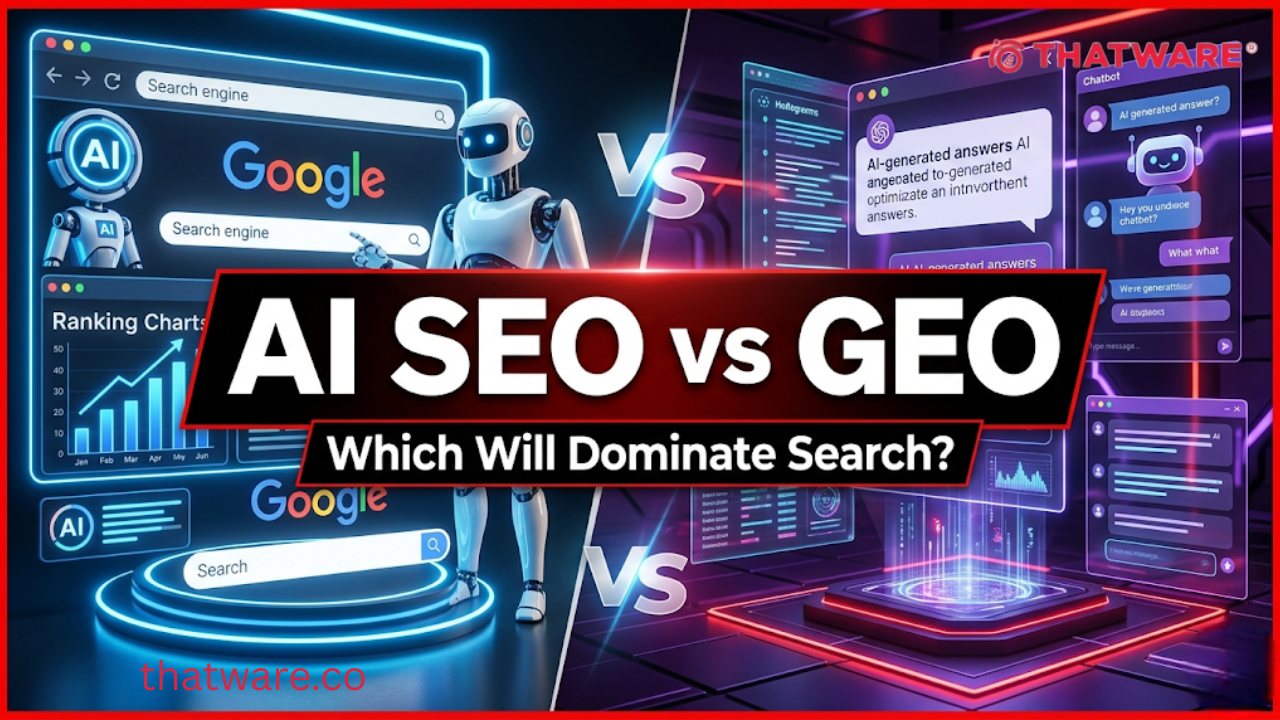
Understanding AI SEO vs GEO
The comparison between AI SEO vs GEO highlights two important approaches in modern digital optimization. AI SEO focuses on improving search rankings through artificial intelligence technologies that analyze user intent, automate optimization tasks, and enhance content quality. GEO, or Generative Engine Optimization, focuses on optimizing digital content for AI-generated search responses and conversational search experiences.Traditional SEO strategies mainly targeted keyword rankings and backlink authority. However, modern search behavior has shifted toward conversational queries, AI-generated summaries, and predictive search experiences. This change means businesses must optimize content in ways that satisfy both search engine crawlers and AI-based answer systems.An advanced AI-driven SEO strategy enables brands to analyze search patterns, automate content structuring, and personalize user experiences more effectively. At the same time, GEO ensures that content is discoverable and valuable within generative AI ecosystems that provide direct answers instead of standard search result pages.
Why Businesses Need an AI-Driven SEO Strategy
Search engines are becoming smarter through machine learning and natural language processing technologies. Businesses that rely on outdated optimization methods may experience declining visibility as algorithms increasingly prioritize semantic understanding and contextual relevance.An AI-driven SEO strategy allows companies to:
Improve Content Relevance
Artificial intelligence tools analyze user behavior, search intent, and engagement patterns to create highly relevant content. This helps businesses produce valuable information aligned with user expectations and evolving search trends.
Enhance Search Personalization
Modern search systems personalize results based on browsing history, preferences, and intent signals. AI-powered optimization helps brands create adaptive content strategies that improve user engagement and conversion rates.
Automate SEO Processes
AI technologies simplify complex SEO tasks such as keyword clustering, technical audits, content recommendations, and competitor analysis. Automation improves efficiency while reducing manual workload.
Optimize for Conversational Search
Voice search and AI assistants have transformed how users interact with digital platforms. Businesses must optimize content for natural language queries and conversational interactions to maintain visibility.
Building a Powerful AI SEO Framework
An effective AI SEO framework combines multiple optimization elements to create a scalable and intelligent digital marketing system. Businesses that adopt structured AI-based optimization models can improve authority, rankings, and long-term growth.
Data-Driven Keyword Intelligence
Modern optimization requires understanding search intent beyond simple keyword targeting. AI systems identify semantic relationships, long-tail opportunities, and emerging trends that support better visibility.
Semantic Content Optimization
Search engines now prioritize contextual meaning instead of repetitive keyword placement. Content must include related concepts, structured information, and entity-based optimization to improve topical authority.
Predictive Search Analysis
AI-powered systems can forecast search trends and identify future opportunities before competitors. Predictive analytics help brands create proactive marketing campaigns and maintain industry leadership.
Technical SEO Automation
An advanced AI SEO framework automates technical improvements such as crawl optimization, schema implementation, page speed enhancement, and mobile usability monitoring.
User Experience Optimization
Search performance is strongly connected to user experience signals including engagement, bounce rates, and interaction quality. AI-driven insights help businesses improve navigation, design, and content accessibility.
Conclusion
The debate around AI SEO vs GEO reflects the ongoing evolution of digital search experiences. Businesses can no longer rely solely on traditional optimization practices because AI-driven search systems are redefining visibility and engagement. Implementing an AI-driven SEO strategy supported by a robust AI SEO framework helps brands improve authority, automate optimization processes, and adapt to future search technologies.Organizations that invest in intelligent optimization today will be better positioned to dominate tomorrow’s search landscape. With advanced innovation and strategic expertise, Thatware LLP empowers businesses to navigate the changing world of AI-powered digital marketing successfully.
#AISEO #GEO #AISEOFramework #AIDrivenSEO #DigitalMarketing #ThatwareLLP #SearchOptimization #FutureOfSEO #GenerativeAI #SEOTrends
Comments